Classification of Discontinuities

Inherent Discontinuities

1st stage of discontinuity

Related to the melting and initial solidification of metal in the ingot (i.e. original steel-making process) Inclusions, Porosity, Pipe.


Image result for Ingot piping defect


Reasons for discontinuities and defects in metal?

The main reason for discontinuities and defects in metals are attributed to the processing of the ore to the casting process to the hot or cold working process.

Defect in casting: There are several casting defects which can be further classified in to five main categories:

  1. Gas porosity.
  2. Shrinkage defects.
  3. Mould material defects.
  4. Pouring metal defects.
  5. Metallurgical defects.


Classification of Discontinuities

Surface discontinuity: Open to surface discontinuity.

Subsurface discontinuity – a discontinuity that is not open onto the surface of an product or test job.
Non relevant indication – indications that are not due to discontinuities.
May be due to abrupt changes in article shape, surface roughness, etc.
Classification of Defects by Origin
Typically grouped into 3 stages:
1. Inherent
2. Processing
3. Service-Induced (also call In-service discontinuity)

Manufacturing Process & Defect.

Definitions
Discontinuity – An interruption (Gas hole, cold shut, crack, forging lap, seam, inclusion, porosity, etc.) in the normal physical structure or configuration of an product or part.
It may or may not be a defect
Defect – a discontinuity that interferes with the usefulness of a part or exceeds  or acceptability limits established by applicable Standard Specifications & Code
Not all discontinuities are defects
Surface discontinuity – a discontinuity open to the surface
May be observed through VT, PT, or MT, More likely harmful to product than a       subsurface discontinuity since it provide start for further damage.

Types of NDT Methods

Non Destructive examination.

The following is a list of nondestructive examination
methods and respective abbreviations used within
the scope of Section V:
RT — Radiography
UT — Ultrasonics
MT — Magnetic Particle
PT — Liquid Penetrants
VT — Visual
LT — Leak Testing
ET — Electromagnetic (Eddy Current)
AE — Acoustic Emission


Destructive & Non Destructive Testing:

What is destructive Testing:

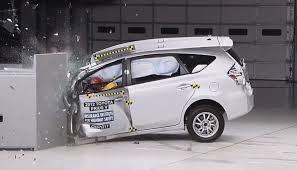
Destructive testing (DT) is the process of inspecting, testing, or evaluating materials, components or assemblies for discontinuities, or differences in characteristics by destroying the serviceability of the part or system. In other words, when the inspection or test is completed the part can not be used.

car destructiv testing

What is Non- Destructive Testing?

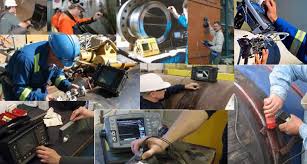
Nondestructive testing (NDT) is the process of inspecting, testing, or evaluating materials, components or assemblies for discontinuities, or differences in characteristics without destroying the serviceability of the part or system. In other words, when the inspection or test is completed the part can still be used.

ndt

Tags:

#NDT #ndt #RT #UT #PT #MT #NDT #LevelII #Certification